
How to Identify Premium Japanese Matcha
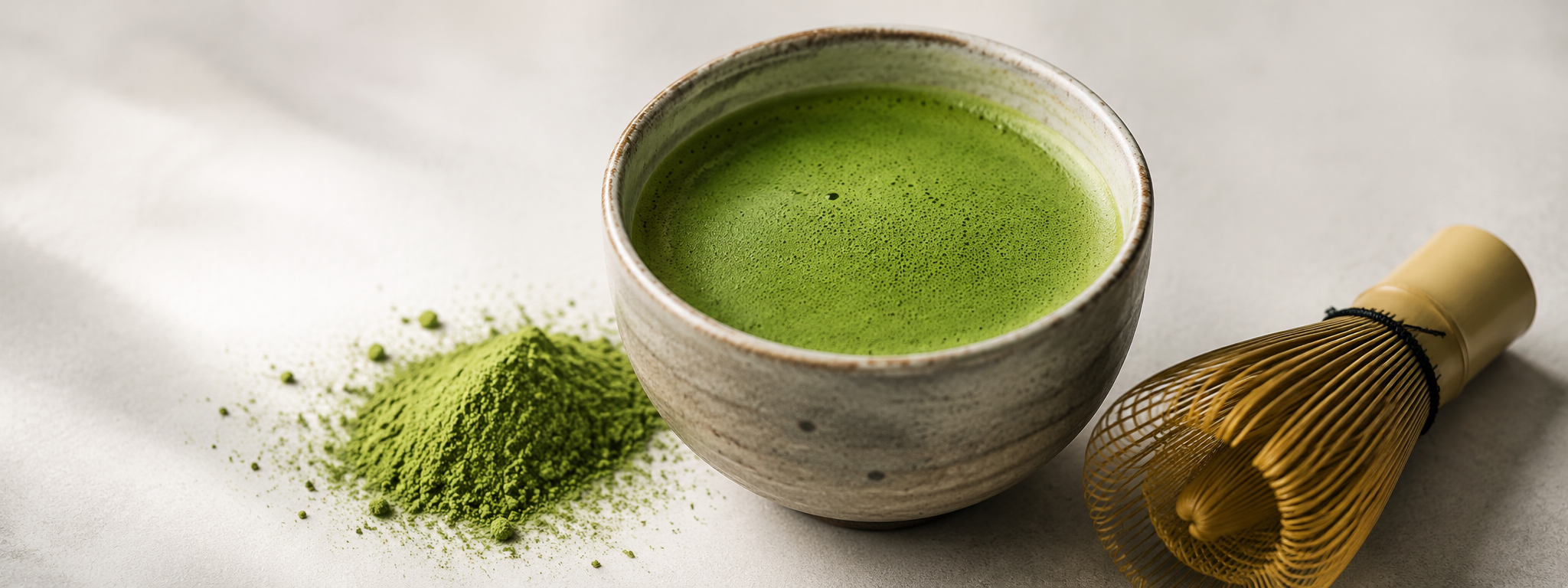
Matcha Is Different From Ordinary Brewed Green Tea
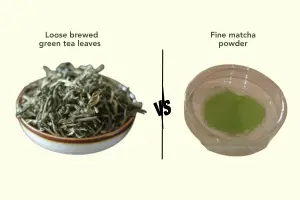
Both matcha and conventional green tea come from Camellia sinensis, but how we consume them differs completely. With conventional tea, leaves are steeped, compounds migrate into hot water, and the leaf is discarded. With matcha, tencha is ground into powder, suspended in water, and consumed whole — leaf and all.
That distinction matters because matcha delivers catechins including EGCG, L-theanine, caffeine, chlorophyll, carotenoids and fibre as a complete package rather than a filtered extraction. A peer-reviewed compositional review found substantial variability between matcha samples, with one cited analysis measuring L-theanine as high as roughly 44.65 mg/g.
What the Research Shows
There isn't one universal chemical fingerprint called "matcha." How the tea was grown and processed determines what's actually in your bowl — which is the single most important idea in this entire guide.
Why Growers Deliberately Remove Sunlight
Plants need sunlight for photosynthesis, so why would Japanese farmers cover tea bushes before harvesting leaves for matcha? Because shading changes the plant's metabolism. Studies comparing open-air cultivation with 85% and 95% shading found that shading increased theanine and caffeine while decreasing several catechins, alongside measurable changes in chlorophyll.
The Sensory Payoff
Higher amino-acid contribution combined with an altered polyphenol profile produces matcha's defining character: stronger umami and less aggressive bitterness or astringency.
Not All Shading Is the Same
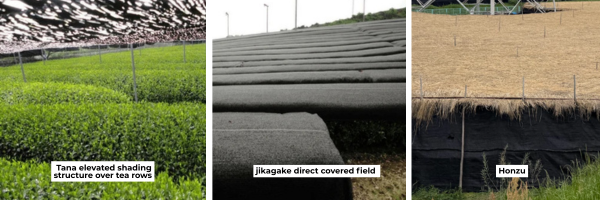
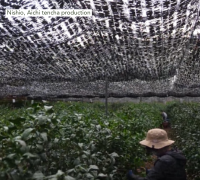
Jikagake (direct covering): Synthetic material placed close to or directly over the bushes — efficient and scalable, though the microclimate around the shoot differs from an elevated system.
Tana (elevated synthetic shading): A raised framework holds shading material above the bushes, giving growers finer control and the shoots room to develop beneath the canopy.
Honzu (traditional shading): Reed screens and rice straw on an elevated structure, progressively reducing sunlight over weeks. Labour-intensive and culturally significant — but not, by itself, proof of superior chemistry.
⚠️ A Question Worth Asking
Whenever someone says "this is premium shade-grown Japanese matcha," the useful follow-up isn't "how green is it?" — it's simply: how was it shaded?
Shading Changes L-Theanine, Catechins and Chlorophyll
L-theanine drives much of matcha's characteristic umami. In the controlled shading study referenced above, theanine peaked under 95% shade, while catechins — epicatechin, epicatechin gallate, epigallocatechin and EGCG — all decreased.
Correcting a Common Misconception
Premium matcha isn't about maximizing EGCG at any cost. It's an engineered balance: amino acids for umami, catechins for astringency and bioactivity, caffeine for stimulation, pigment for colour, and volatile compounds for aroma — not simply "the greenest powder with the most antioxidants."
Why First Harvest Matters
Ichibancha — first-flush tea — comes from tender new shoots produced as the plant emerges from winter dormancy, and their chemistry and sensory profile differ noticeably from later-season leaf. Later harvests still have culinary value, but for matcha meant to be whisked as usucha or koicha, first harvest is the standard worth asking for. Instead of only asking "is this Japanese matcha?" — ask whether it's first harvest.
Matcha Begins With Tencha
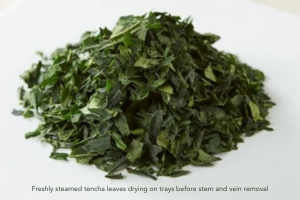
Premium matcha isn't ordinary green tea pulverized into powder. After harvest, leaves are steamed, dried, and refined to remove stems and veins, producing tencha — the specific raw material matcha is ground from. Grinding mediocre leaf extremely fine doesn't transform it into premium matcha. Raw-material quality always comes before grinding quality.
Why Stone Grinding Matters
The ishiusu, or traditional stone mill, grinds tencha into matcha remarkably slowly — production is typically measured in tens of grams per hour, not kilograms. The reason producers value this isn't tradition for its own sake: particle characteristics from slow stone milling shape mouthfeel, dispersion, aroma release, and the almost-creamy texture premium matcha can have despite containing no dairy.
⚠️ Stone Ground Alone Isn't Proof
If poor-quality tencha goes into the mill, poor-quality matcha comes out. The real hierarchy is: agriculture → tencha quality → refinement → grinding → freshness → storage.
Five Tests You Can Perform at Home
👁️ Colour
Look for a vivid green appropriate to the cultivar. Dull yellow-green or brownish tones can point to inferior raw material, later harvest, aging, or poor storage — though colour alone never proves quality.
👃 Aroma
Smell before adding water. Premium matcha should have a fresh, complex aroma, sometimes including the distinctive shade-aroma known as ooika. A flat, stale or hay-like smell is worth investigating.
🤏 Texture
Rub a small pinch between your fingers. Good matcha feels exceptionally fine rather than obviously gritty.
👅 Taste
Look for balance: umami, then sweetness, then controlled astringency, then a clean finish. Some bitterness is completely normal — the goal isn't zero bitterness, it's balance.
🥣 Whisking Behaviour
Compare matchas only under identical conditions — same powder quantity, water, temperature, bowl and whisking time. Foam is influenced by technique and water chemistry, so it's never a standalone quality test.
What Makes Matcha Biologically Interesting?
Three constituents draw most scientific attention: EGCG (epigallocatechin gallate), one of green tea's major catechins; L-theanine, an amino acid tied to umami and studied for effects on attention and stress; and caffeine, a familiar stimulant. The genuinely interesting feature isn't any single compound — it's the phytochemical matrix these form together when the whole leaf is consumed.
What Happened When Older Adults Consumed Matcha for 12 Months?
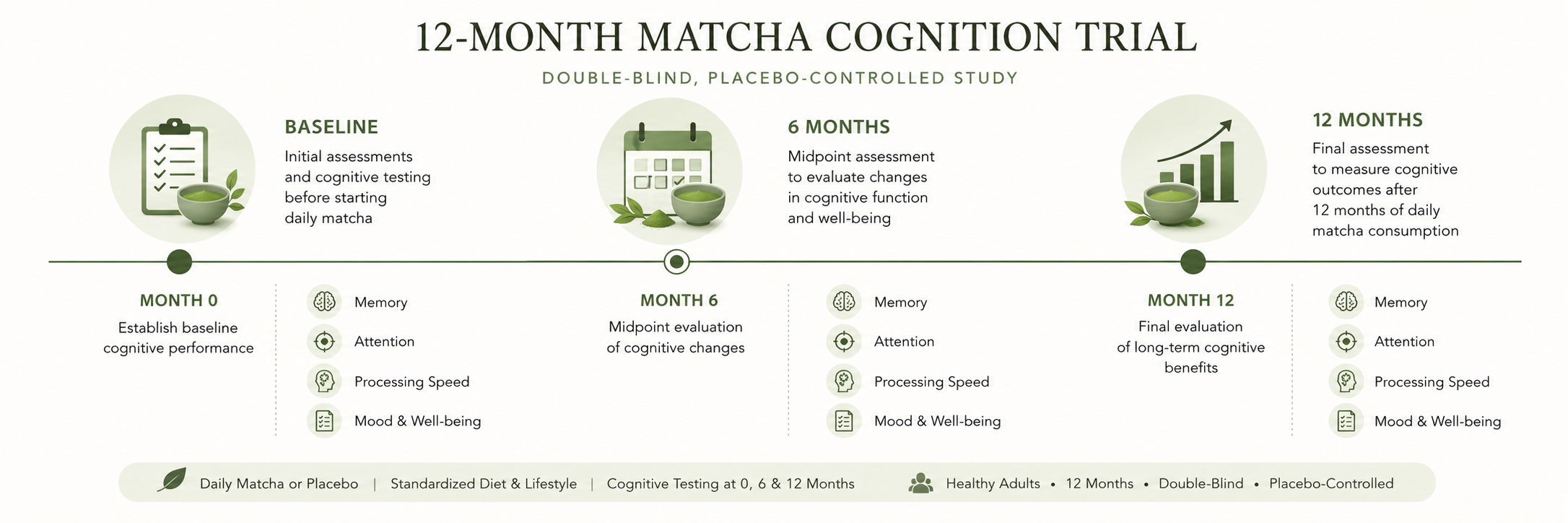
A randomized, double-blind, placebo-controlled trial published in PLOS ONE in 2024 enrolled 99 adults aged 60–85 with subjective cognitive decline or mild cognitive impairment, assigned to either 2 grams of matcha daily or a placebo for 12 months.
Trial Results
The matcha group showed a statistically significant improvement in social acuity, including facial-emotion perception. Sleep-quality scores trended toward improvement without reaching statistical significance. The trial's primary cognitive outcomes — MoCA and ADCS-MCI-ADL — did not significantly improve.
⚠️ What This Study Does Not Show
This does not prove matcha prevents Alzheimer's disease. It suggests long-term matcha consumption deserves further investigation for selected cognitive and sleep-related outcomes — nothing more, nothing less.
Matcha and Mood: A Dopamine Experiment
Another study investigated matcha's effects on depression-like behaviour — but in mice, not humans. Researchers exposed stress-susceptible C57BL/6J mice to social-isolation stress and administered matcha powder. Matcha reduced immobility in a standard behavioural test; blocking dopamine D1 receptors erased the effect, alongside observed changes in prefrontal-cortex and nucleus-accumbens dopaminergic circuitry.
⚠️ Mouse Behaviour Is Not Human Evidence
This is a mechanistic hypothesis involving dopamine signalling — not clinical evidence that matcha treats human depression.
Matcha and the Gut Microbiome
A human study combining matcha consumption with resistance training found changes in gut bacterial genera including Ruminococcus, Butyricimonas and Oscillospira, correlated with changes in maximum strength. The matcha group also experienced a greater training-associated increase in skeletal muscle mass, alongside lower salivary cortisol.
How to Read This
Researchers concluded daily matcha "may support" muscle adaptation to training — language that leaves room for replication, not a finished conclusion. The study doesn't establish that matcha directly builds muscle through gut bacteria; it offers a microbiome–muscle hypothesis requiring further study.
What About Matcha and Cancer?
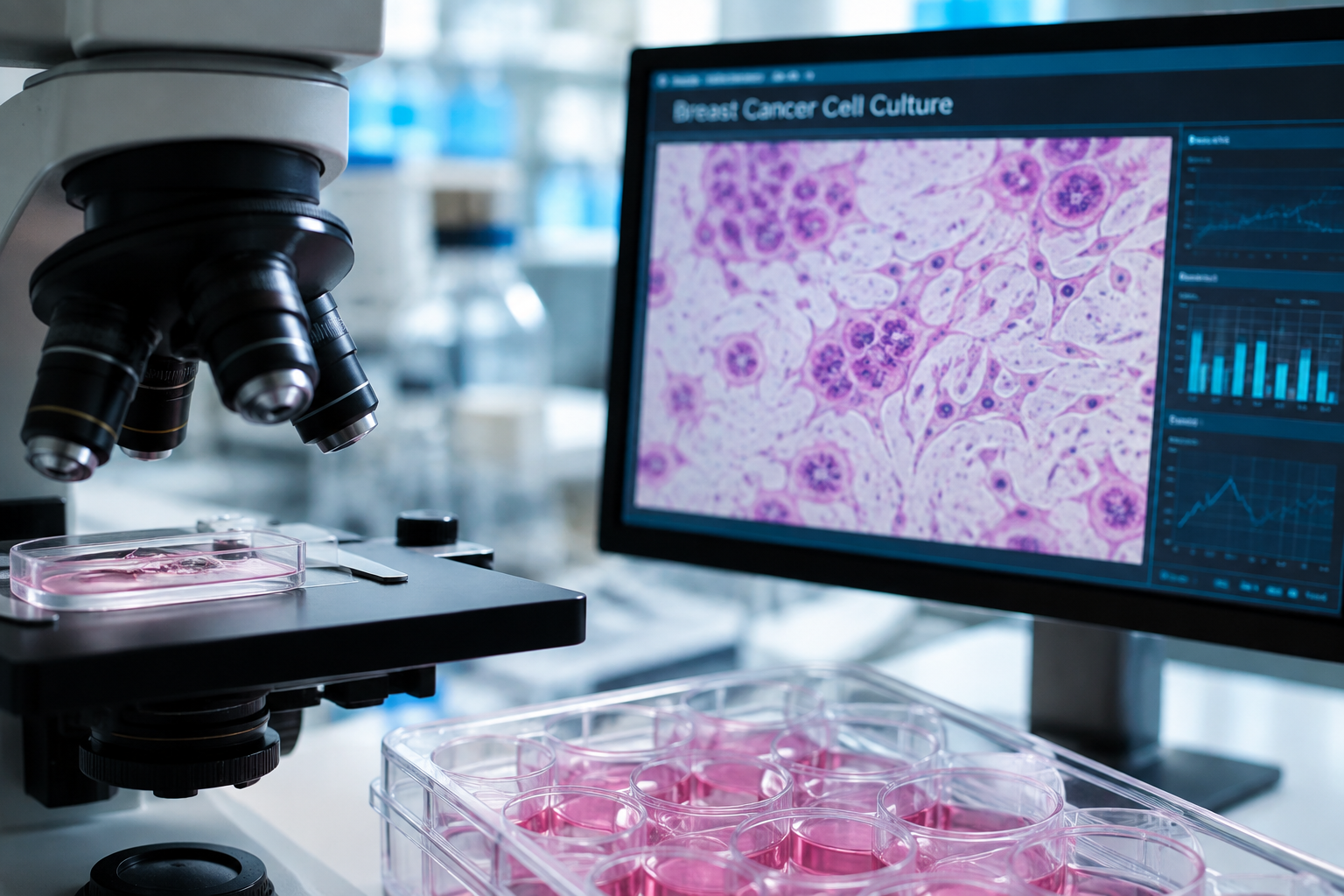
Headlines have claimed matcha "kills cancer stem cells." There is real research behind that headline — but the headline leaves out the most important detail: the experiment was performed on cells in a laboratory dish, not in patients.
Researchers at the University of Salford studied MCF7 ER-positive human breast-cancer cells and their cancer stem-like behaviour. At roughly 0.2 mg/mL matcha in tissue culture, they reported about a 50% reduction in mammosphere-forming capacity, alongside suppressed mitochondrial oxidative metabolism, ATP production, and glycolytic flux. Proteomic analysis pointed to altered signalling in mTOR pathways, ribosomal machinery and cell-cycle regulation.
⚠️ What This Research Does Not Establish
This does not show that drinking matcha prevents breast cancer, eliminates cancer stem cells in patients, treats an existing tumour, prevents recurrence, or replaces chemotherapy, endocrine therapy, surgery or radiotherapy.
The accurate reading: matcha demonstrated effects on cancer stem-like properties and cellular metabolism in one ER-positive breast-cancer cell model — a mechanistic hypothesis requiring animal and, ultimately, human clinical validation.
EGCG: Probably Matcha's Most Famous Catechin
EGCG is extensively studied across oxidative signalling, inflammation, apoptosis, proliferation, angiogenesis and cellular metabolism. But there's an important trap here: EGCG experiments, green-tea-extract experiments, and whole-matcha experiments are not interchangeable. Injecting purified EGCG into animals doesn't tell you what drinking matcha does to a person — dose, bioavailability and metabolism all diverge.
Matcha Is Not a Medicine
Matcha shouldn't be positioned as a treatment for cancer, Alzheimer's disease, depression or metabolic disease — that misses the bigger scientific story. Matcha is a complex food matrix of catechins, L-theanine, caffeine, pigments and fibre, and researchers are studying how those compounds interact across human, animal and cell-culture evidence. A responsible interpretation keeps those three categories separate.
The Evidence Pyramid for Matcha
Weigh Every Claim Before You Repeat It
Level 1 — Human randomized trial: The strongest evidence for establishing effects under specific experimental conditions.
Level 2 — Human observational or intervention evidence: Interesting, but potentially influenced by confounding variables and study design.
Level 3 — Animal experiment: Useful for mechanisms, but not proof of a human health outcome.
Level 4 — Cell-culture experiment: Excellent for generating hypotheses, but very far from demonstrating that drinking matcha produces the same effect inside a person.
How We Evaluate Premium Japanese Matcha
We don't start with the words printed on the front of a package. We work backwards, through the same chain the leaf actually travelled — farm, tencha, grinding, storage, sensory, and laboratory analysis.
- Farm: Origin, cultivar (Asahi, Ujihikari, Samidori, Saemidori, Okumidori), shading system, shading duration, and harvest timing.
- Tencha: Was it genuinely produced as tencha — harvested, steamed, dried, and cleanly separated from stems and veins?
- Grinding: Stone milled or otherwise? What fineness, and when was it milled relative to sale?
- Storage: Fill date, oxygen exposure, light-resistant packaging, and storage conditions — freshness matters enormously once tea becomes powder.
- Sensory: Colour, aroma, umami, sweetness, astringency, bitterness, texture, finish and whisking behaviour.
- Laboratory analysis: L-theanine, EGCG, total catechin profile, caffeine, moisture, microbiological safety, heavy metals and pesticide residue where relevant.
Uji, Yame and Nishio: Does Origin Matter?
Uji (Kyoto) is deeply associated with Japanese tea history; high-end Uji matcha is often valued for complex umami, aroma and refinement.
Yame (Fukuoka) is particularly known for gyokuro and increasingly sought-after matcha, with cultivars like Saemidori and Okumidori producing remarkably sweet, rich profiles.
Nishio (Aichi) has a long history of tencha and matcha production with substantial specialization in matcha manufacturing.
A Necessary Caution
"Uji," "Yame" and "Nishio" don't automatically mean excellent. Terroir is one variable inside a much larger production system — cultivar, fertilization, shading, harvest timing, processing and storage all still apply.
Single Cultivar vs. Master Blend
Specialty-food culture often assumes single origin equals superior — that isn't quite how traditional Japanese tea works. A single-cultivar matcha expresses one variety's character transparently. A skilled blender combines lots and cultivars to balance aroma, colour, umami, sweetness, body and finish. Single cultivar gives individuality; master blending gives consistency. Neither wins by default.
The Questions to Ask Before Buying Expensive Matcha
The next time somebody shows you a beautiful green powder and calls it premium Japanese matcha, don't stop at "how green is it?"
- Where was it grown, and which cultivar?
- How was it shaded, and for how long?
- Was it first harvest?
- Was the raw material genuine tencha, and how was it processed?
- How — and when — was it ground?
- How was it stored?
- What does it actually taste like?
- If EGCG or L-theanine levels are being claimed, where is the batch-specific laboratory report?
Premium Japanese matcha isn't its colour, and it isn't the word "ceremonial." It's the final expression of an entire chain — genetics, terroir, agriculture, shading, harvest, tencha processing, grinding, storage, chemistry, sensory experience, and potential biological effect. Once you can see that chain, you stop buying matcha off the packaging and start evaluating it against evidence.
Evaluate Matcha the Way We Do — By Evidence, Not Marketing
Just as we hold MISO and black garlic to a standard of PubMed-linked, compliance-safe research, we believe matcha deserves the same rigour: real cultivation detail, real processing transparency, and honest labelling of what's proven in humans versus what's only been shown in cells or mice.
Educational content only. Matcha, like all foods discussed here, is not a medicine and is not intended to diagnose, treat, cure or prevent any disease. Please consult your healthcare provider before making significant dietary changes, especially if undergoing medical treatment.